[TL;DR]For compact 9-hole mini golf courses (20–40 hectares), 2-seater golf carts cut procurement & maintenance costs by 25–40% and pass narrow cart paths with a smaller turning radius. Standard 18-hole medium courses (60–80 hectares) prioritize 4-seater carts for balanced passenger capacity and maneuverability. Large championship/resort courses (over 100 hectares) mix 4-seater for on-course play and 6-seater for clubhouse shuttle service. Mini carts excel at low daily traffic; large 6-seaters work for high-volume resort group transport. Green Electric supplies all three models and can customize cart width, wheelbase and cargo racks to match your course's path layout and daily visitor volume.
Core Decision Logic for Matching Cart Seats to Course Size
Course operators rarely choose cart seats by passenger count alone. Their core pain points are: narrow cart paths causing jams, high cart turnover slowing tee times, excessive maintenance costs for oversized carts, or insufficient passenger space for family/team groups. The fundamental matching rule between course scale and cart seating directly solves these operational bottlenecks. This guide compares 2/4/6-seater carts across key operational indicators, then shares a step-by-step customization method for golf courses of different sizes.
Core Advantages of Each Seating Capacity Golf Cart
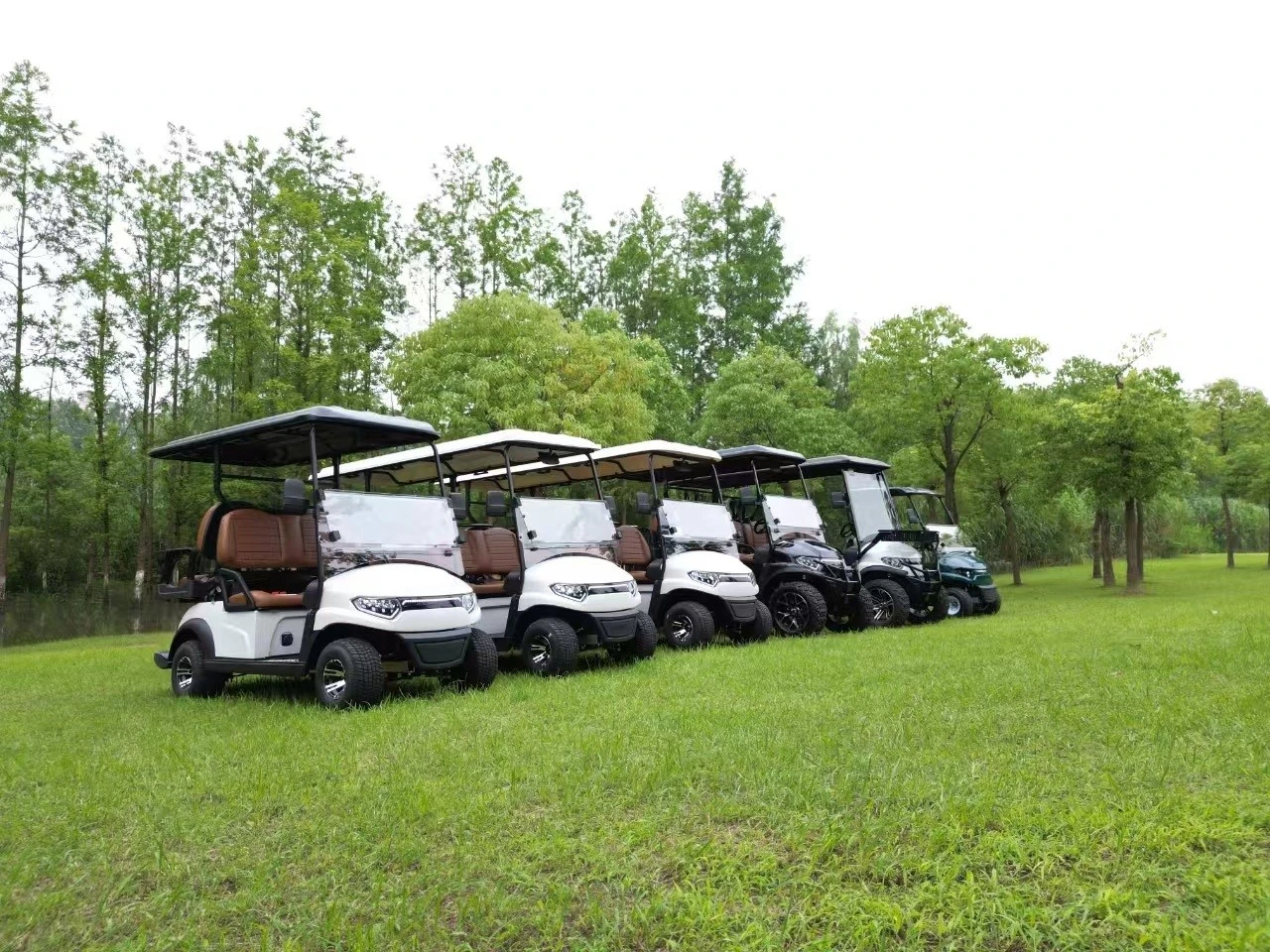
1
2-Seater Standard Golf Cart
Compact size with ≤3.2m turning radius for 1.3m narrow paths, low cost and power use, saving half parking space with standard golf bag rack.
2
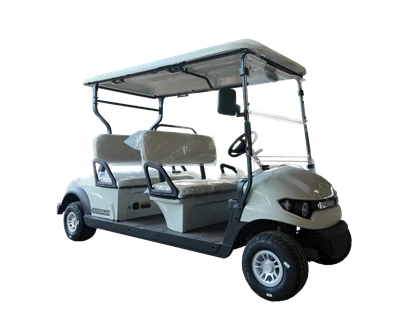
4-Seater Balanced Golf Cart
Fits 1.5m standard paths, holds four people for multi-scene use, mainstream rental cart with optional cargo shelf and solar charging.
3
6-Seater Extended Golf Cart
Carries six guests with large battery and reinforced chassis, only for wide main roads of large resort courses due to big turning radius.
2/4/6-Seater Golf Carts vs. Different Scale Golf Courses
| Evaluation Factor | 2-Seater Golf Cart | 4-Seater Golf Cart | 6-Seater Golf Cart |
| Procurement & Maintenance Cost | 25–40% lower; fewer batteries & wearing parts | Medium cost, balanced input-output | Highest cost, large battery & extended chassis |
| Minimum Cart Path Width Requirement | 1.3m narrow paths | 1.5m standard paths | ≥1.8m wide main roads only |
| Turning Radius | ≤3.2m, flexible for tight bends | 3.8–4.2m, fits most standard layouts | ≥4.8m, poor flexibility on twisty fairways |
| Daily Passenger Matching | Mini courses, low single/double player traffic | Standard 18-hole, mainstream foursome teams | Large resort courses, group shuttle service |
| Cart Storage Occupancy | Saves 50% warehouse space | Medium storage footprint | Requires expanded dedicated parking area |
| Best Matching Course Scale | Mini 9-hole courses (20–40 hectares) | Standard 9/18-hole medium courses (50–90 hectares) | Championship/resort integrated courses (>100 hectares) |
Key Takeaway: If your course is a compact 9-hole city mini course with narrow paths and low daily visitor volume, 2-seater carts cut long-term operating costs significantly. Standard standalone 18-hole courses with average daily traffic rely mainly on 4-seater carts for maximum operational balance. Large resort championship courses need a mixed fleet: 4-seaters for on-hole play, 6-seaters for clubhouse-hotel shuttle.
Step-by-Step Guide to Select & Customize Golf Cart Seating Capacity
1,Confirm your total course area & path specifications
- Mini compact courses (20–40ha, narrow 1.3m paths): Prioritize full 2-seater fleet.
- Medium standard courses (50–90ha, 1.5m standard paths): Main 4-seater fleet, small batch of 2-seaters for single players.
Large resort courses (>100ha, wide main circulation roads): Core 4-seaters for on-course rental, matched 6-seaters for group shuttle.
2,Calculate daily peak passenger composition
- Mainly single/couple players → higher proportion of 2-seaters;
- Mostly 4-person amateur teams → full 4-seater layout;
Frequent tournament groups, hotel guest transfers → supplement 6-seater shuttle carts.
3,Check terrain & hole spacing
- Short-distance compact 9-hole courses: Lightweight 2-seaters save power;
- Hilly standard 18-hole courses: 4-seaters with reinforced suspension;
- Oversize championship courses with long hole intervals: 6-seaters with large-capacity lithium batteries.
4,Customize supporting configurations by seat model
- 2-seater: Compact golf bag rack, mini rain shield;
- 4-seater: Flip rear cargo shelf, anti-slip all-terrain tires;
- 6-seater: Rear luggage storage box, multi-person safety belts, reversing camera.
Why Course Operators Choose Greenman Electric Golf Cart Manufacturer
Greenman Electric runs a 12,000 sq.m standardized production plant, equipped with integrated chassis welding, paint spraying and finished cart assembly lines. The enterprise holds ISO 9001 quality, ISO 14001 environmental and ISO 45001 occupational safety certifications, with 12 years of professional golf cart R&D and production experience. We provide a 24-hour technical response window, independently producing 2/4/6-seater models, allowing operators to test multiple seating types from one supplier without multi-supplier coordination costs. We can adjust cart width, wheelbase and battery capacity according to your actual cart path width and course terrain.
Final Summary
Selecting golf cart seating capacity according to course scale hinges on three core factors: total course land area, cart path width and daily passenger group composition. Small compact mini courses gain the most cost and flexibility benefits from 2-seater carts; medium standard 18-hole courses take 4-seaters as the universal optimal choice; large integrated resort/championship courses adopt a mixed fleet of 4-seaters + 6-seaters to separate on-course play and group shuttle functions. Send your course area, cart path width and daily peak visitor data to our technical team for targeted seating quantity matching recommendations.
Frequently Asked Questions
Q:1.What's the max cruising range?
A:Up to 80km per full charge; longer uninterrupted operation reduces spare vehicle investment.
Q:2.Battery options?
A:Standard maintenance-free lead-acid; optional lithium iron phosphate for 5-year long warranty & lower long-run maintenance cost.
Q:3.Can seat colors & appearance becustomized?
Full OEM/ODM customization available to match your venue brand and stand out from competitors.
Q:4.What is the Minimum Order Quantity?
A:1 full FCL 20GP general cargo container, partial container shipments are not permitted
Q:5.What warranty coverage do we provide for this vehicle model?
Main components come with a 2-year warranty, and lithium batteries are covered under a 5-year warranty. Consumable vulnerable parts such as tires, glass and fuses are not included in the warranty scope.
Q:6.What is the production lead time?
Production lead time ranges from 20 to 30 working days upon receipt of your formal deposit and confirmed order specifications